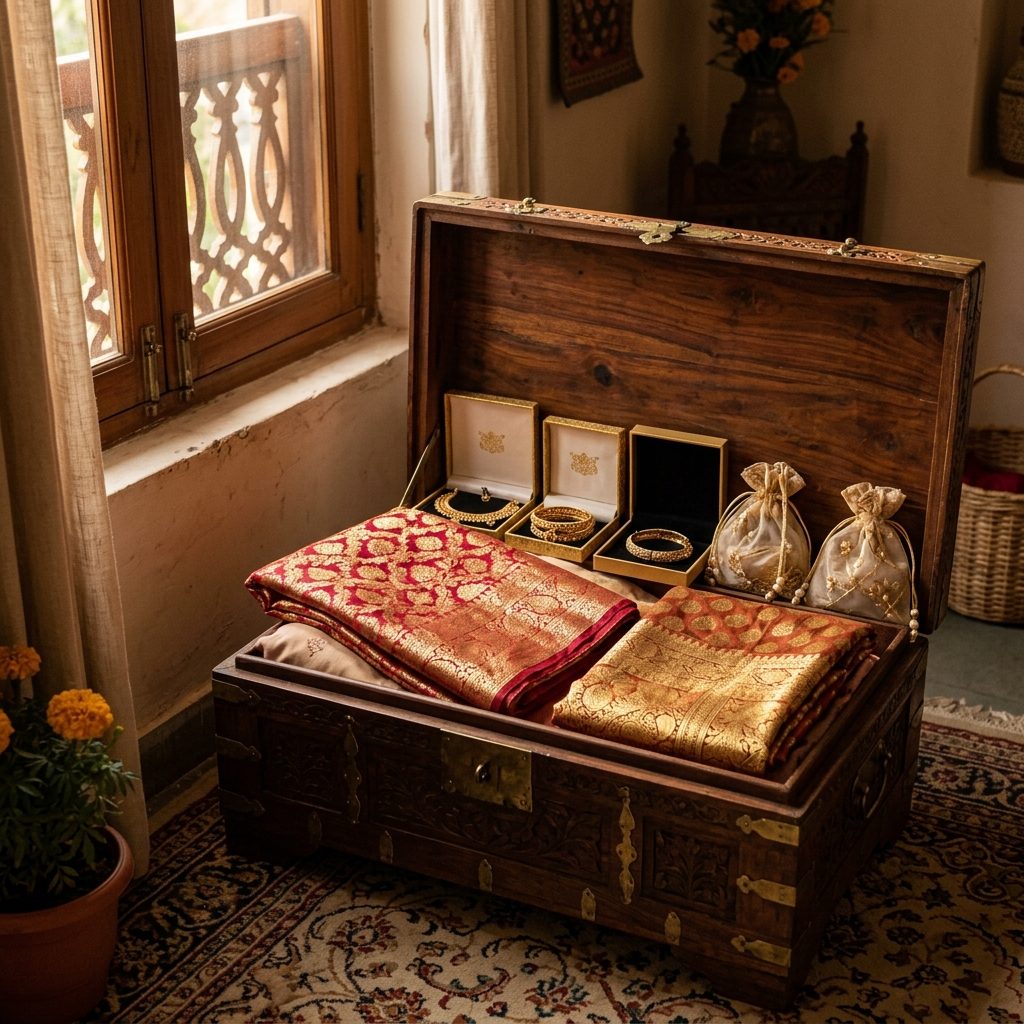
The Indian bridal trousseau, traditionally known as the patra, sada, or sandook, is far more than a collection of new clothes and accessories. It is a curated chest of heritage, familial love, and practical essentials designed to ease a bride’s transition into her new home. Rooted deeply in regional customs across India, assembling the trousseau is a cherished ritual in itself, where mothers, grandmothers, and aunts pass down heirloom textiles, precious jewelry, and household wisdom to the bride-to-be.
The Timeless Handloom Heirlooms
At the heart of every Indian wedding trousseau are the classic handlooms that represent the bride's regional identity and cultural roots. For a South Indian bride, a heavy Kanjeevaram silk saree with pure zari borders is indispensable, while a North Indian bride treasures a gold-woven Banarasi silk. Similarly, a Gujarati bride will include a traditional Garchola or Bandhani, and an Assamese bride will pack a beautiful Mekhela Sador. These six-yard wonders are timeless heirlooms. Families traditionally purchase these during auspicious shubh muhurats, viewing each acquisition as a sacred blessing. A complete trousseau features heavy silks in auspicious colors like vermillion red, mustard yellow, orange, and deep emerald green, which the bride wears during post-wedding home-entry rituals, pujas, and her first festivals as a newlywed.
Modern Essentials: Blending Tradition with Comfort
While heavy silks hold sentimental and ritualistic value, modern Indian brides prioritize utility and versatility. Today's trousseau must balance traditional grandeur with daily comfort. It is wise to include a mix of contemporary garments and styling elements that transition easily from day to night:
- Fusion Wear: Pastel Anarkalis, lightweight georgette sarees, and linen kurtas for casual family dinners.
- Footwear: A mix of flat embroidered juttis, wedges, and versatile metallic heels.
- Vanity Essentials: The Solah Shringar items, including high-quality sindoor, bindis, alta, and traditional ittar.
- Utility Organizers: Velvet potlis, travel-friendly jewelry boxes, and padded saree covers.
These practical additions ensure the bride carries the auspicious glow of her new status with ease and confidence.
A bride's trousseau is not merely a collection of beautiful garments; it is a physical manifestation of her family's blessings, woven into threads of silk and gold to accompany her into a new lifetime.
The Ritual of Packing and Gifting
The presentation of the trousseau is itself a celebrated event, known as the trousseau trunk viewing or Peti Puja in various communities. Beautifully decorated trunks, velvet potlis, organza bags, and customized garment covers are used to protect and display these precious items. In many traditions, the trousseau also contains carefully selected gifts for the groom’s immediate family members, symbolizing respect, warmth, and the harmonious union of two families. While modern wedding planning digitalizes many tasks, the tactile, emotional process of packing the bridal trousseau remains an irreplaceable bonding experience between a mother and her daughter.
As you prepare for this beautiful new chapter of life and begin curating your bridal essentials, remember that every detail of your journey deserves to be handled with care. Creating a meaningful connection with the right life partner is where this beautiful story begins. Start your matrimonial journey on the right note by crafting a beautiful, tradition-focused profile using the Shubh Muhrat Biodata Maker to connect with families who value heritage just as much as you do.