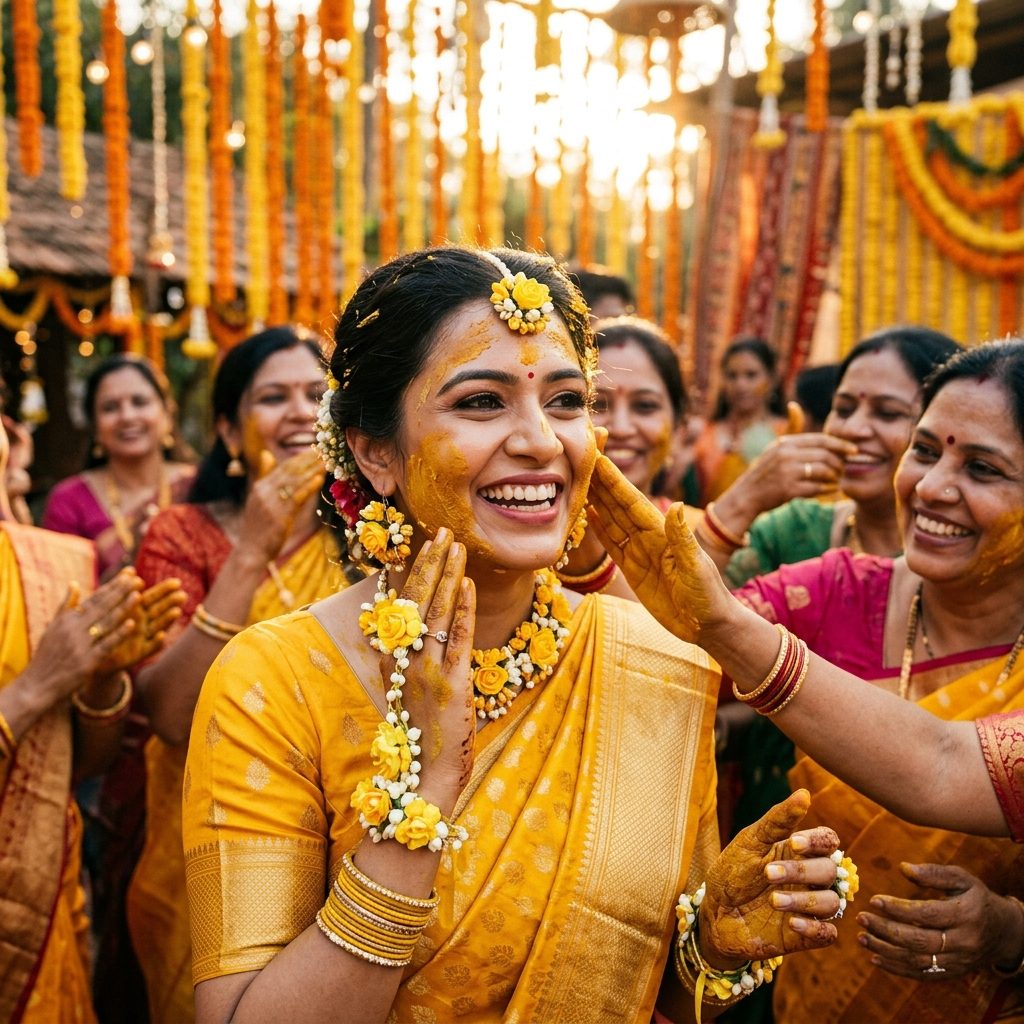
The Haldi ceremony, also known as Pithi, Gaye Holud, or Halda across various regions, is one of the most vibrant and emotionally charged pre-wedding rituals in an Indian wedding. While it is celebrated with laughter, music, and playful smearing of yellow paste, the ceremony holds profound spiritual, scientific, and cultural significance. It is not merely a fun get-together but a sacred rite of passage that prepares the bride and groom for their upcoming union.
The Healing and Purifying Power of Turmeric
Historically, Indian rituals have always been deeply intertwined with Ayurveda, the ancient science of life. Turmeric (haldi) is renowned for its anti-inflammatory, antiseptic, and purification properties. In the days leading up to the wedding, the bride and groom are subjected to intense preparation and emotional buildup, which can cause physical fatigue and stress. Applying a paste of turmeric, sandalwood, oil, and rose water acts as a natural exfoliant and skin brightener, giving the couple that signature wedding glow. More importantly, its medicinal properties protect the couple from minor ailments, cuts, and infections, ensuring they are healthy and radiant for their big day. It acts as a natural shield, purifying the physical body before the spiritual vows are taken.
Spiritual Cleansing and Warding off Evil
Beyond its physical benefits, the Haldi ceremony is a spiritual shield. According to Hindu customs, turmeric is highly auspicious and symbolizes purity, fertility, and prosperity. The application of haldi is believed to ward off the 'buri nazar' (evil eye) and protect the couple from negative energies as they transition into married life. This is also why, traditionally, the bride and groom are not allowed to leave their respective homes after their Haldi ceremony until the wedding day. The ritual serves as a protective boundary, keeping them safe during this vulnerable transitional phase.
The golden hue of turmeric signifies the light of a new dawn, purifying the mind, body, and soul of the couple before they step into the sacred bond of marriage.
The act of family members, especially elders and married women, applying the paste is symbolic of passing down ancestral blessings. Every stroke of the yellow paste is accompanied by prayers for the couple's health, mutual love, and fertility. It is a communal bonding experience where the couple receives the collective goodwill of their extended family.
Regional Variations and Community Traditions
While the essence of the ritual remains the same, different communities across India celebrate it with unique local flavors:
- Gaye Holud (Bengal): In Bengali weddings, the turmeric paste is first presented to the bride's family from the groom's side, accompanied by gifts and a decorated fish, symbolizing prosperity.
- Pithi (Gujarat and Rajasthan): Known as Pithi, the paste is made with chickpea flour, turmeric, and rosewater, applied by family members who offer blessings for a prosperous future.
- Halda (South India): In various southern traditions, the ceremony is performed early in the morning, where married women (Sumangalis) apply the paste to bless the couple with marital bliss.
- Tel Baan (North India): Often combined with the mustard oil application, this ritual focuses on preparing the couple's body for the upcoming wedding vows.
As families come together to apply this golden paste, the air is filled with joy, traditional folk songs, and laughter. It is a beautiful reminder of the community's support for the couple. If you are planning your own wedding festivities and want to gather your loved ones for this beautiful ritual, you can design stunning digital invitations using the Shubh Muhrat Invite Studio to ensure all your relatives and friends are there to bless you with turmeric and love.