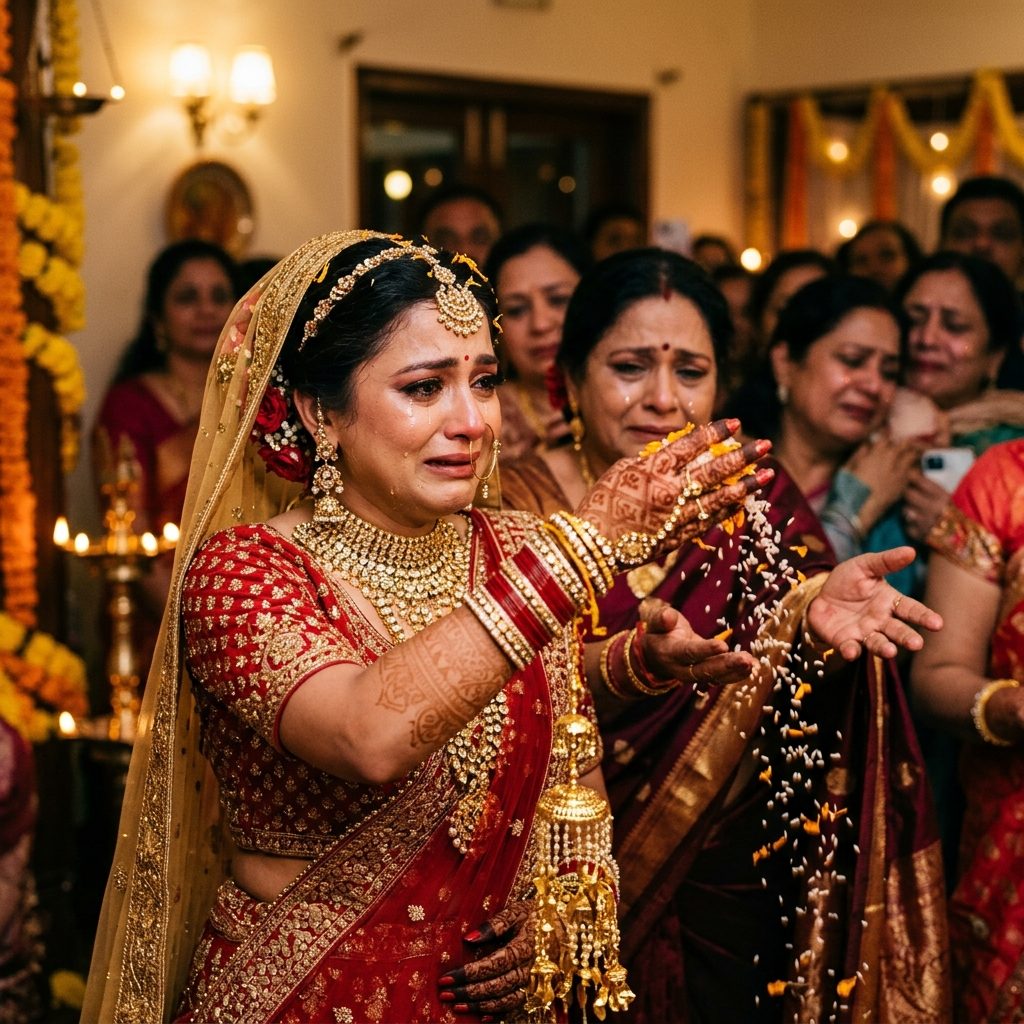
The Indian wedding is a beautiful tapestry of vibrant celebrations, sacred vows, and deep emotional transitions. Among all the ceremonies, the Vidaai (also known as Bidaai) stands out as the most poignant and heartfelt. It marks the formal departure of the bride from her parental home to embark on a new life journey with her partner. While it is often accompanied by tears, the rituals associated with Vidaai are layered with profound spiritual, psychological, and social significance that date back centuries.
The Symbolic Ritual of Throwing Rice
As the bride walks out of her parental home, she performs the ritual of throwing raw rice, sometimes mixed with coins, backwards over her head. Her mother stands directly behind her to catch this offering in her pallu or dupatta. This action is deeply symbolic. In Hindu culture, a daughter is considered the manifestation of Goddess Lakshmi, the deity of wealth and prosperity. By throwing rice backward, the bride symbolically reassures her parents that even though she is leaving, she leaves behind wishes for everlasting abundance, wealth, and happiness in their home. It is also an act of gratitude, representing the repayment of the spiritual and material debts to her parents for raising her with love and care.
Regional Adaptations of the Farewell
While the essence of the farewell remains universal across the country, the local customs vary beautifully across different regions of India. These regional nuances reflect the rich diversity of Indian wedding traditions:
- Kanakanjali in Bengal: The bride puts rice in her mother's hands, declaring that she has paid off her maternal debts—a symbolic statement that emphasizes the emotional weight of separation.
- Sadaa Suhagan in the North: Brothers lead the bride to her vehicle, signifying their eternal support and promise of protection throughout her life.
- Kanyadaan Farewell in the South: The bride seeks final blessings from clan elders, performing traditional salutations to ensure a prosperous future in her marital home.
"The Vidaai is a sacred threshold where a daughter's past beautifully merges with her future, demonstrating the resilience of familial love in Indian society."
Navigating the Emotional Shift in Modern Times
In modern times, while the core emotional values of Vidaai remain unchanged, the way families experience this transition has evolved. Today, families strive to make this transition smoother by keeping the atmosphere supportive and celebratory, focusing on the new beginnings ahead. Planning every phase of the wedding carefully allows families to experience these emotional rites of passage without the stress of last-minute logistics. It allows the parents and the bride to savor these final moments of the wedding day without anxiety.
To help you plan every detail of your traditional journey seamlessly, Shubh Muhrat offers digital solutions designed for modern Indian families. You can craft elegant, culturally resonant digital invitations for all your ceremonies, including the farewell rituals, using the Invite Studio. This ensures your guests are kept informed of every sacred hour, allowing you to focus on the moments that truly matter.